Mesa Pool Tile
Pool Tile & Coping in Mesa, AZ
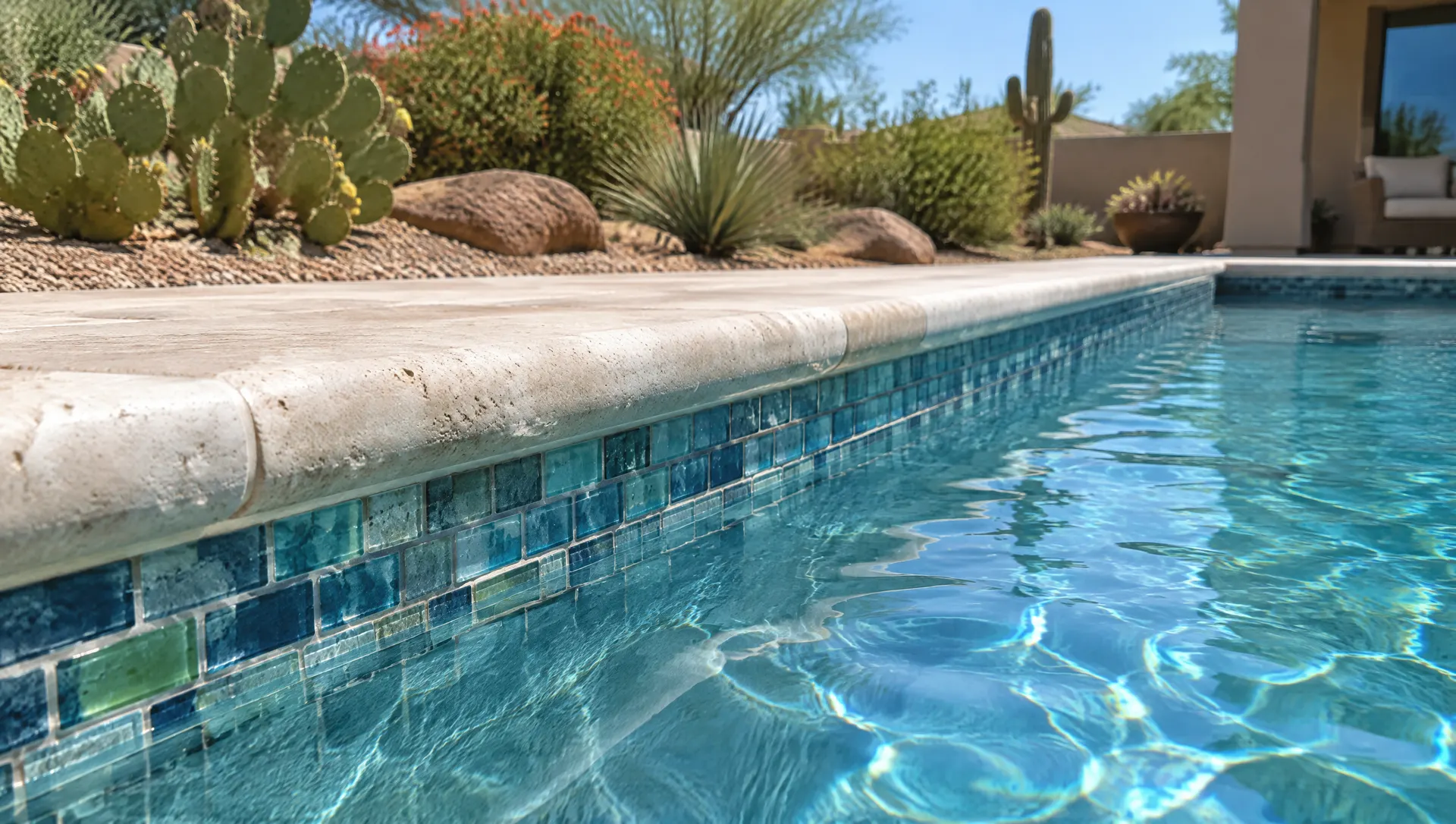
New waterline tile and coping for edges that are scaled, loose or cracked.
Mesa Pool Tile
New waterline tile and coping for edges that are scaled, loose or cracked.
The tile line takes the worst of Mesa's hard water. Calcium builds up in a white crust at the waterline, grout washes out and tiles start to pop loose.
Coping is the cap around the pool's edge. Older Mesa pools often have narrow poured concrete coping or a cantilevered deck edge that has cracked or separated from the shell.
New tile and coping are usually set before a new interior finish, so the edges are done first and the new surface finishes cleanly against them.
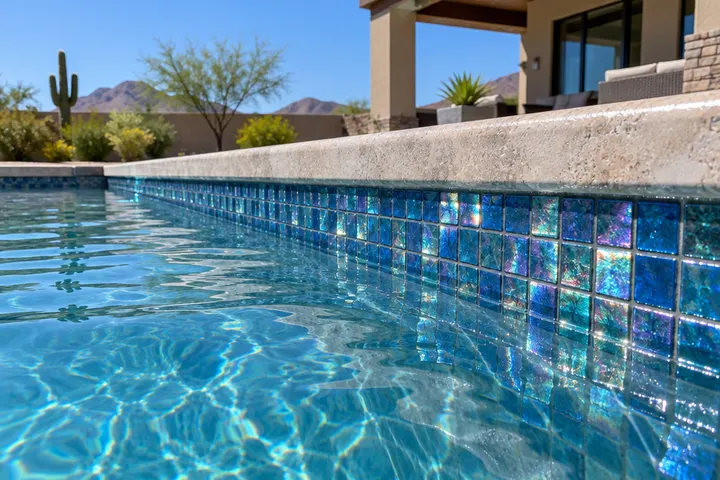
Mosaic glass that catches the light and resists staining.
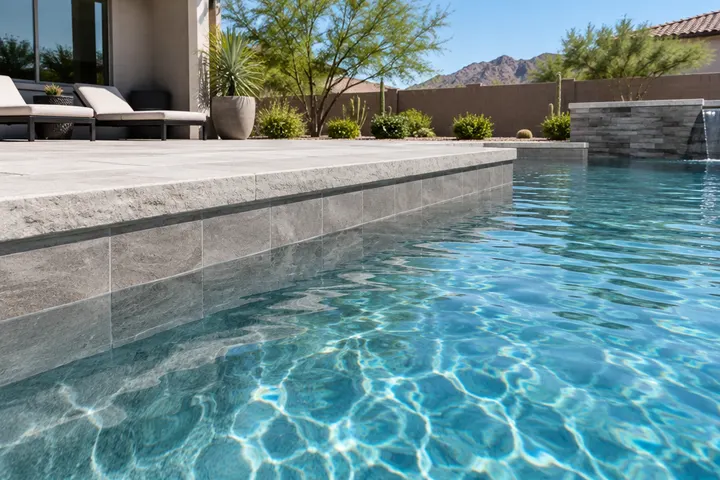
Stone-look or solid-color tile that's easy to clean.
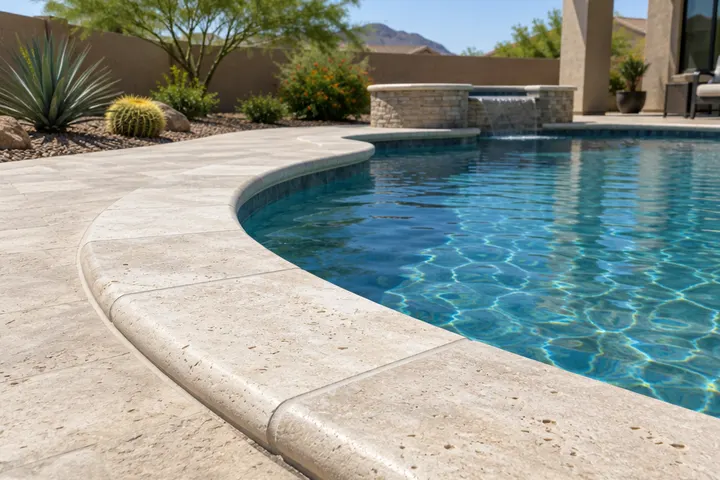
Travertine or natural stone set with a rounded edge that stays cooler.
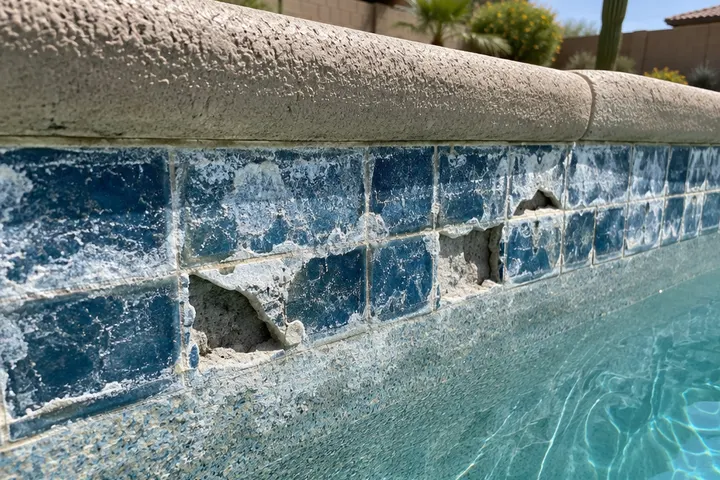
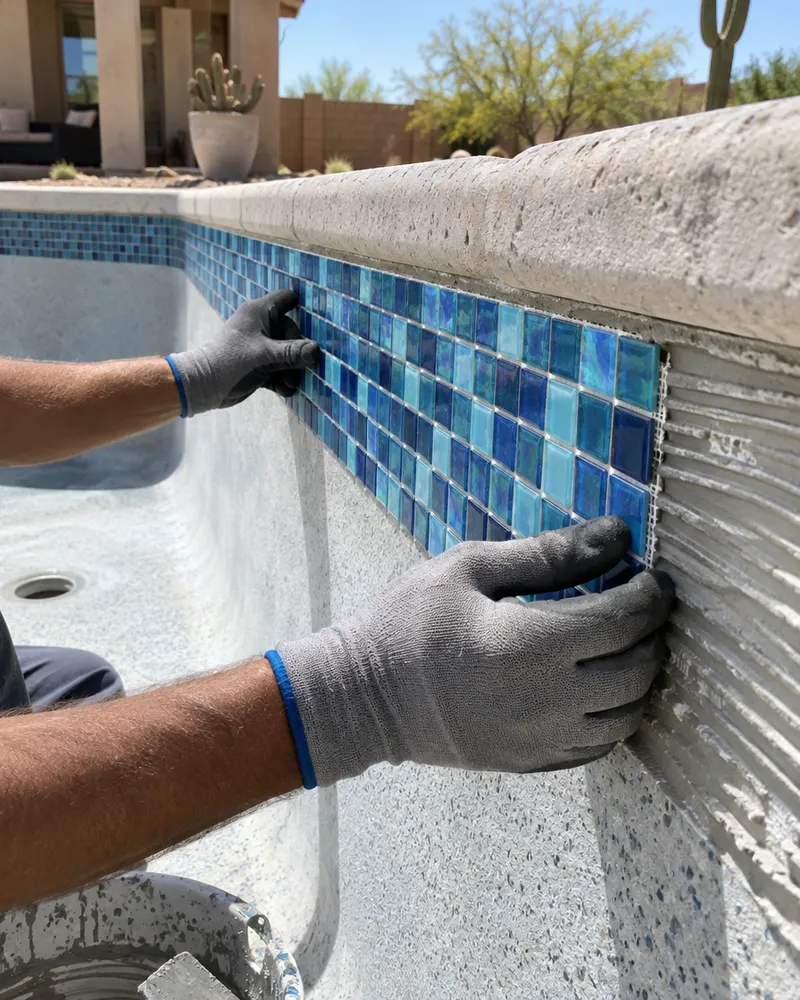
Old crusted tile removed and the bond beam repaired.
| Tile | Look | Upkeep | Good choice for |
|---|---|---|---|
| Glass mosaic | Shimmering, bright | Scale wipes off more easily | A modern, colorful waterline |
| Porcelain | Stone, solid or patterned | Low | Most remodels |
| Natural stone | Earthy and textured | Needs sealing | Desert-style yards |
| Ceramic | Classic square tile | Moderate | Simple, budget-minded refreshes |
For a few loose tiles, sometimes. A full tile line usually needs the water lowered below the tile, and most owners pair it with a resurface while the pool is down.
Light-colored travertine and other natural stone stay cooler underfoot than dark materials. We bring samples so you can feel them in afternoon sun.
Mesa's water carries a lot of calcium, and it deposits as the water evaporates. Glass tile cleans more easily, and keeping the water balanced slows the buildup.
Not always. Coping can often be replaced alone. If the deck is cracked or tied into the old edge, we'll explain how the two connect before you decide.
Send us a photo or a description of your pool's edge. We'll look at it and show you tile and coping options.
Free estimate, no obligation